





Caritas
Oil on panel, 96 x 124 cm
Published on RKD
Attributed to Vincent Sellaer (Mechelen, 1490-1564) and workshop
Caritas
Oil on panel, 96 x 124 cm
Published on RKD
Attributed to Vincent Sellaer (Mechelen, 1490-1564) and workshop
Attributed to Vincent Sellaer (Mechelen, 1490-1564) and workshop
Caritas
Oil on panel, 96 x 124 cm
Published on RKD
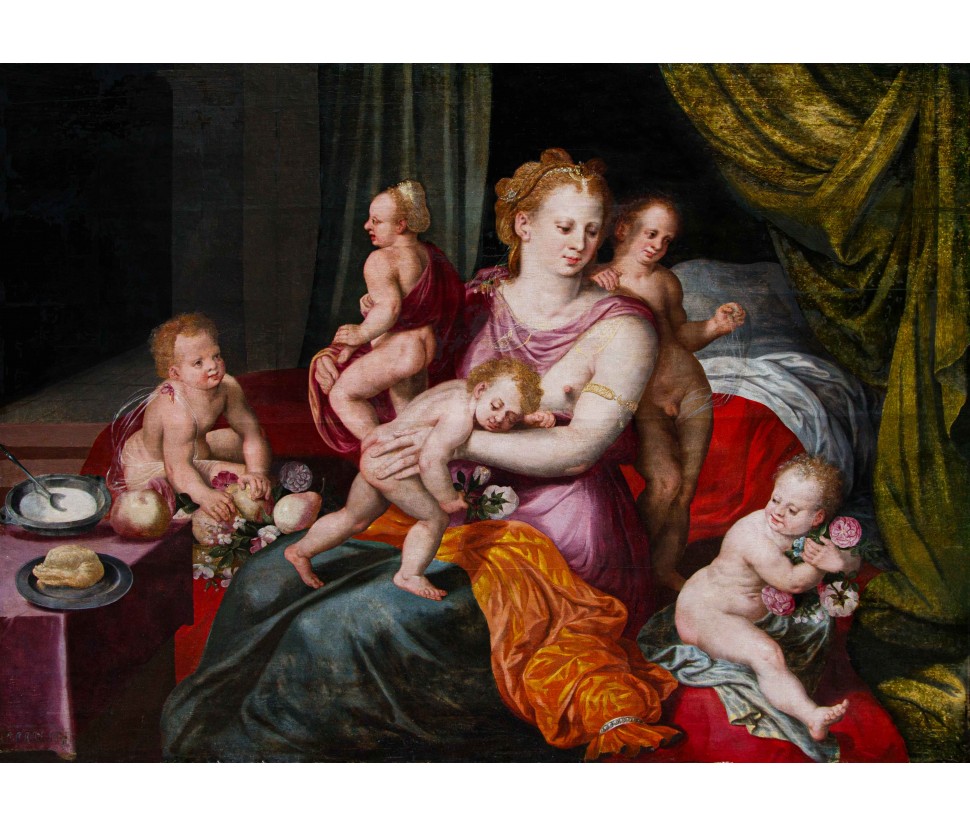
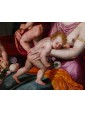
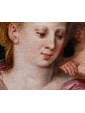
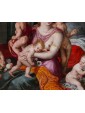
This painting depicting “Caritas” attributed to Vincent Sellaer (1490 - 1564) and his workshop in Flanders offers an interesting example of how artists dealt with subjects long consolidated in the pictorial tradition. Caritas, one of the cardinal virtues, has been depicted often, including in prints by artists such as Beham, Goltzius, Matham, Maerten de Vos and many others.
Sellaer's work fits perfectly into this iconographic tradition, depicting Caritas as a woman surrounded by fruit, flowers and children. Apparently, Vincent Sellaer, active in Malines, specialised on this subject: he and his workshop created numerous variations on the theme, including a painting today in the Alte Pinakothek in Munich. This last work shows clear influences of Florentine Mannerist prototypes, in particular from Francesco Salviati.
The scene depicted best exhibits that sophisticated Italianizing “manner” which permeated Flemish painting in the mid-16th century inspired by the examples of the Tuscan Renaissance and, in our case, of the Leonardesque style of Solario, Marco d'Oggiono or, better yet, of Giampietrino. These influences would, therefore, attest to the news, reported by major Flemish art biographer Karel van Mander, of a trip to Italy by Sellaer which took place between 1521 and 1524, visiting the cities of Milan, Brescia and Florence.
Another version of the composition, previously attributed to Lambert Lombard, was part of the private collection of Josef Vincenz Novák in Prague at the end of the 19th century (1899, catalog no. 48). This attribution was later rejected by German art historian Max J. Friedländer, who instead assigned the work to Frans Floris, an artist contemporary to Sellaer.
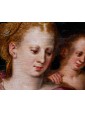
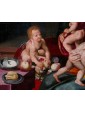
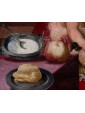
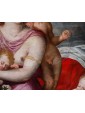
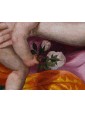
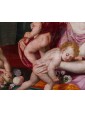
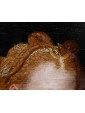
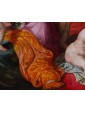
Analysing Sellaer's painting in more detail, we can appreciate his skill in composing the scene. The central female figure, Caritas, is well balanced within the composition and dominates the pictorial space. Her gaze is directed towards the observer, creating a sense of interaction and involvement. The palette is vibrant and harmonious, with her warm skin tones contrasting nicely with the cool colours of the clothing and the background. The fruit and flowers surrounding the allegorical figure are depicted with great attention to detail, adding an element of richness and abundance to the scene.
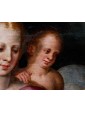
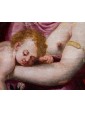
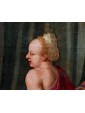
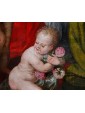
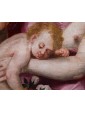
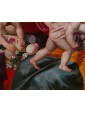
The presence of children, a symbol of love and charity itself, further reinforces the meaning of the painting. The children hold onto the woman, some with an imploring look, others playing with each other, creating an atmosphere of tenderness and familiarity.
The painting was created by Vincent Sellaer with the collaboration of his workshop. At the time it was customary for master painters to avail themselves of the help of students and collaborators for the creation of large-scale artworks or for multiple commissions. Sellaer’s workshop must have been particularly active and specialized, producing numerous variations on the same theme.
This painting is an interesting testament to the iconographic continuity in Flemish painting of the 16thcentury. The work fits into a consolidated tradition, but at the same time demonstrates the artist’s ability to adapt the models to his own interpretations, as proved by the Mannerist influences derived from the trip to Italy. The presence of different variations on the Caritas theme produced by Sellaer and his workshop also proves the importance and diffusion of this subject at the time. This panel, therefore, is an important addition to Sellaer’s still scant catalogue, which includes also the Charity of the Prado, the Sacred Kinship at Scheffler Palace and the Judith in the Kunstmuseum Bern.
