


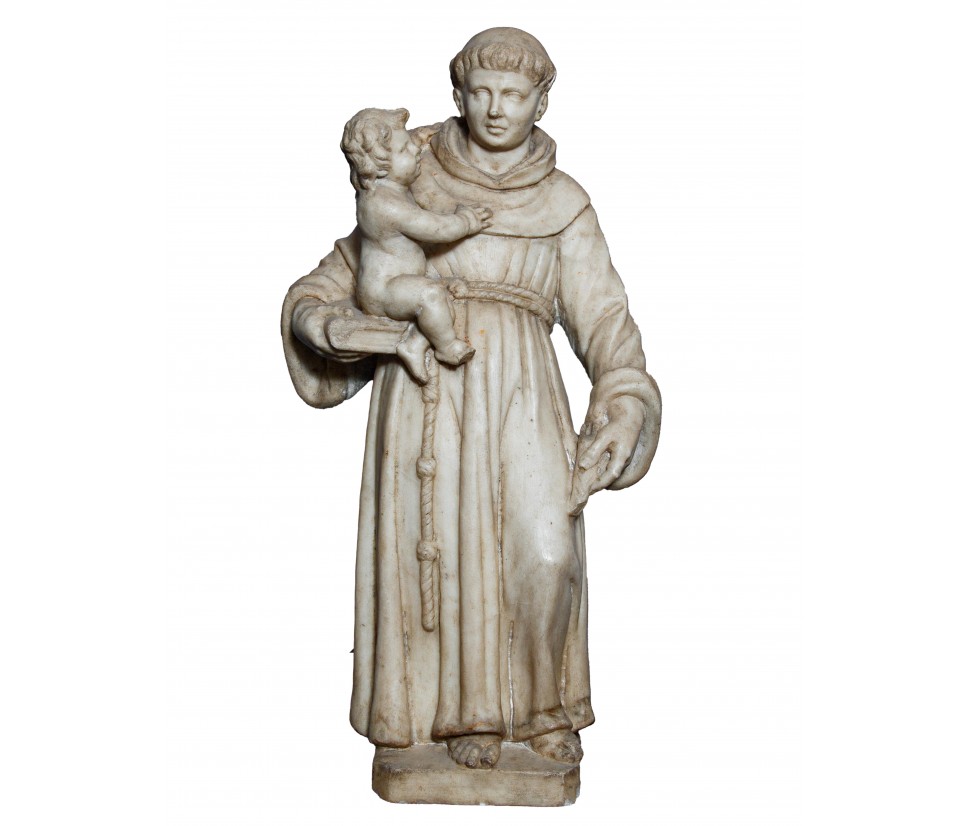
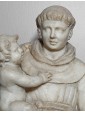
Saint Anthony of Padua with the Child
Marble, cm 65 x 32 x 18
Venetian school, 18th century
Saint Anthony of Padua with the Child
Marble, cm 65 x 32 x 18
Venetian school, 18th century
Venetian school, 18th century
Saint Anthony of Padua with the Child
Marble, cm 65 x 32 x 18
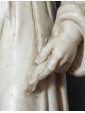
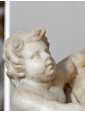
This marble statue depicts Saint Anthony of Padua with the Child in his arms; this iconography is very widespread in Christian art because, shortly before dying, the Saint would have had a vision starring Jesus child. The cult of Antonio is very rooted throughout the peninsula but especially in Veneto and, above all in the city of Padua, of which he is patron and where he was brought in the last days of life to be buried. He died at the Clarisse monastery in the Arcella district, just outside the city, and then moved to the current Ark Chapel, inside the Basilica del Santo. Originally from Lisbon, constantly travelling between Portugal, France and Italy, Antonio chose the Venetian city as his permanent place of residence when he was not travelling. Here he wrote the Sermones, a work of profound theological analysis that earned him the election to Saint in 1232, just one year after his death, as well as to Doctor of the Church in 1946.
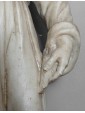
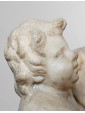
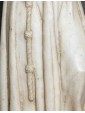
In addition, always there he established himself as a preacher, so much so that he was constantly sought after by the crowd of faithful citizens; his enormous capacities as a preacher and great knowledge in the theological field will also bring him to light in the eyes of Saint Francis, who decided to send him to convert the Cathar heretics in southern France in 1224. For these particular qualities and for the writing of the Sermones, he is represented with a book in his hand, on which the Child is sitting, and a white lily, symbol of purity, while in every depiction, pictorial or sculptural, he wears the Franciscan dress. Here too we recognize the garments of the order by their hood and cordons with three knots, symbols of the three Franciscan rules: Poverty, Chastity and Obedience. The sculpture was made in the seventeenth century, following a taste for ancient art; indeed, although the subject does not derive from the Greek or Roman classicism, it embodies the imperiousness of the pose and the solemnity of the expression, Giving the figure of the Saint a bearing similar to that of the heroes of ancient mythology or the great Roman emperors. The plasticity of the garments merges with the body of the effigy, giving it volume and substance, while the Child follows the solemn gravity of expression adding a certain dose of contemplative curiosity, typically childish.
