


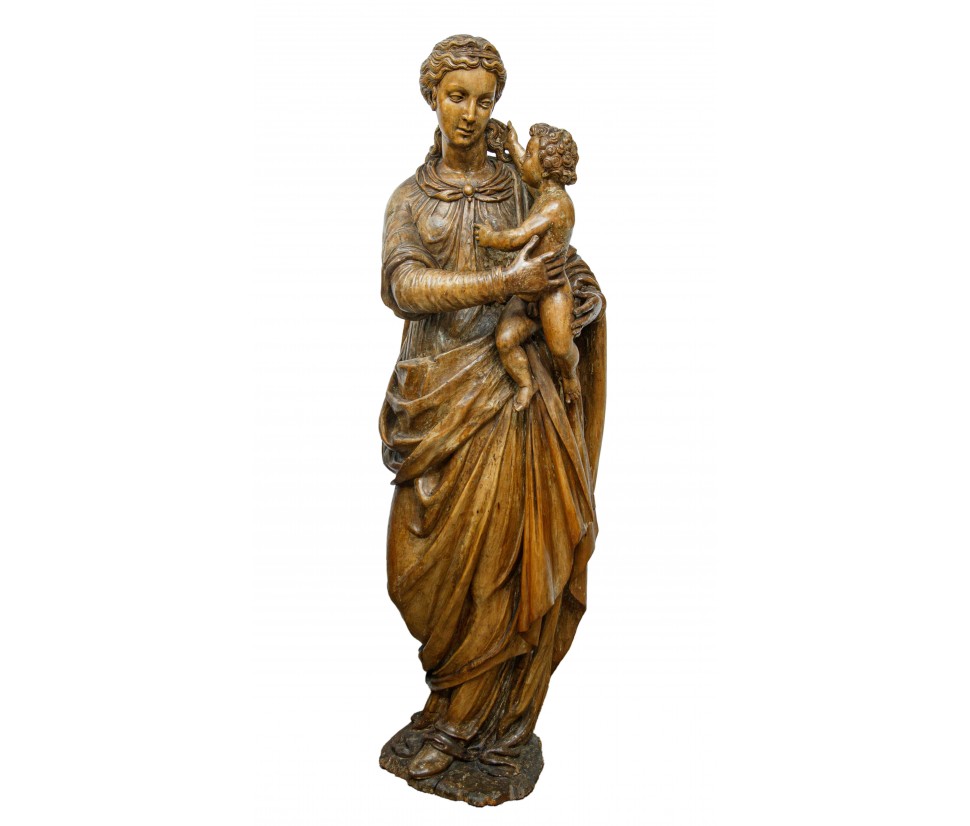
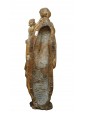
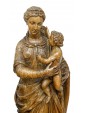


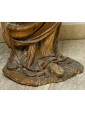
Madonna and Child
Poplar wood, cm 152 x 45 x 33
Lombardy, second half of the 16th century
Madonna and Child
Poplar wood, cm 152 x 45 x 33
Lombardy, second half of the 16th century
Lombardy, second half of the 16th century
Madonna and Child
Poplar wood, cm 152 x 45 x 33
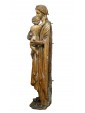
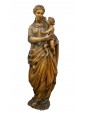
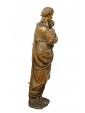
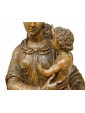
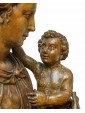
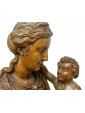
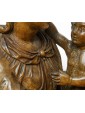
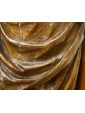
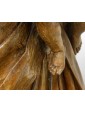
The Madonna and Child under examination is of extreme sweetness and naturalness, dating back to the second half of the 16th century. It was made by a workshop in northern Italy using precious carved and patinated poplar wood. Poplar, in fact, is characterized by being a type of light wood, homogeneous in the veins and with a light color, widely used as a base for artistic and craft decorations. From an iconographic point of view, the Madonna under examination seems to be directly borrowed from the model of Roman matrons, as evidenced by the hairstyle of the hair, wavy and with a central parting, but above all the clothing: over a full tunic is the stole, long to the feet and enriched with a sumptuous drapery. To complete the dress there is a large cloak of fabric freely draped around the body, thus creating volume in the lower part of the sculpture. It is also characterized by the great realism with which the sculptor makes the mother interact with the Child. Jesus, in fact, is not presented with the hieraticness that would impose his being divine but is an infant who twists in the arms of his mother to play with her curls.
The sculpture is to be attributed, given the undeniable reminiscences with the works of the Carra, a family of sculptors active in Brescia and the surrounding territories between the 16th and 17th centuries, to the hand of a skilled Lombard carver of the 16th century.
The historiography remembers three fundamental members of the family: Giovanni Antonio Carra, the founder, and his two sons Giovanni and Carlo Carra. Various works are attributed to the various members of the family, mainly statues and decorative elements in churches and palaces in the city and its surroundings, which influenced local Baroque art for a long period, until the more exuberant and eighteenth-century art of the Calegari. The author here has succeeded in rendering in wood the magnanimity of the works of the Carra, usually stone workers. In fact, the stylistic and compositional similarities are undeniable, see the Saint Catherine and Saint Cecilia of the New Cathedral of Brescia by Antonio Carra or the female figures of the Sepulchral Ark of the Saints Faustino and Giovita in the homonymous Brescian church.
