


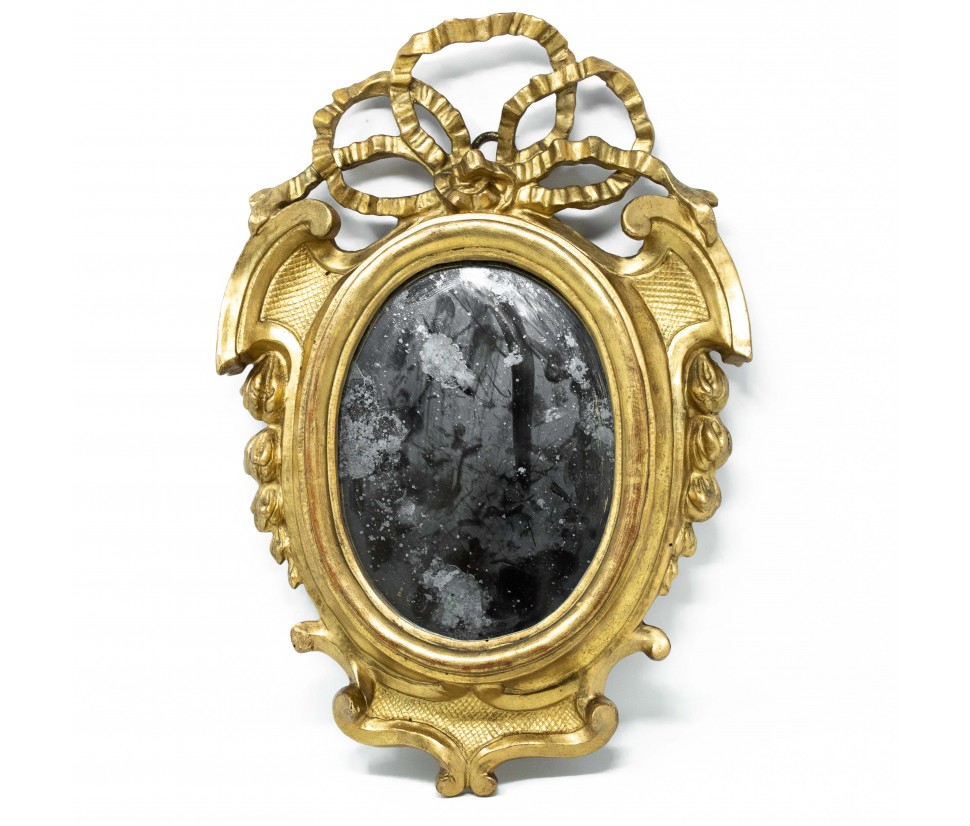
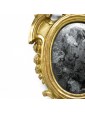
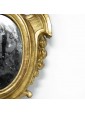
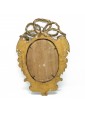
Mirror with ribbons
Golden wood, cm 38 x 27
Light: cm18 x 13
Piedmontese, Louis XVI, 18th century
Mirror with ribbons
Golden wood, cm 38 x 27
Light: cm18 x 13
Piedmontese, Louis XVI, 18th century
Piedmontese, Louis XVI, 18th century
Mirror with ribbons
Golden wood, cm 38 x 27
Light: cm18 x 13
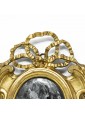
Compared to the Louis XV style that developed during the last decades of the eighteenth century, called Louis XVI (although it spreads before the ascent to the royal throne of King Louis XVI) prefers the classic and elegant lines, almost in antithesis with the abundance of decorative elements typical of Rococo and Louis XV. Louis XVI acceded to the throne in 1774, on the death of his grandfather, the long-lived king Louis XV. Unlike his predecessor, a great patron and lover of the arts, the young sovereign preferred solitary and often bizarre pastimes, such as building watches or locks. The Louis XVI style thus developed independently of the king’s will, and was the result of multiple factors. It must be said that the success of this style is largely due to Queen Marie Antoinette, who invested a lot in the renovation of furniture and decorations but also thanks to the support of Madame de Pompadur and Madame du BarryWe can say that the Louis XVI is a style of passage, from rococo to neoclassicism, more simple and sober but always of refined execution. The key element is the renewed interest in the themes of classical Greek and Roman culture, which prefers linear forms, geometric composure, symmetrical decorations and evocative of antiquity. Garlands, laurel leaves, Greeks, floral motifs, mythological inlays, columns and capitals, which combine with precious materials such as wood essences, gilded bronze and marble, in a formal synthesis that reflects the taste of the time. In Italy, the Louis XVI style adopts the stiffened and geometric structure without giving up the memory of the rocaille taste in decoration, as witnessed by the present mirror from the frame to the time stresso elaborate but with simplicity. The cross-ribbons of the top cyma are a typical element of the period while the side and bottom volutes still denote the interest in the style of the previous period.
With Ars Antiqua it is possible to extend all amounts up to € 5,000 at ZERO RATE, for a total of 12 INSTALLMENTS.
Ex. Tot. € 4.500 = Monthly instalment € 375 for 12 months.
Ex. Tot. € 3.600 = Monthly instalment € 720 for 5 months.
For amounts over € 5,000 or for a longer delay in time (more than 12 installments), we can provide a personalized payment.
Contact us directly to get the best quote.
LIVE TV
- SUNDAY 19.00 - 23.00 Dig.terr. 126 + 813 SKY
- Streaming on our website www.arsantiquasrl.com and on our social networks Facebook and Youtube
