


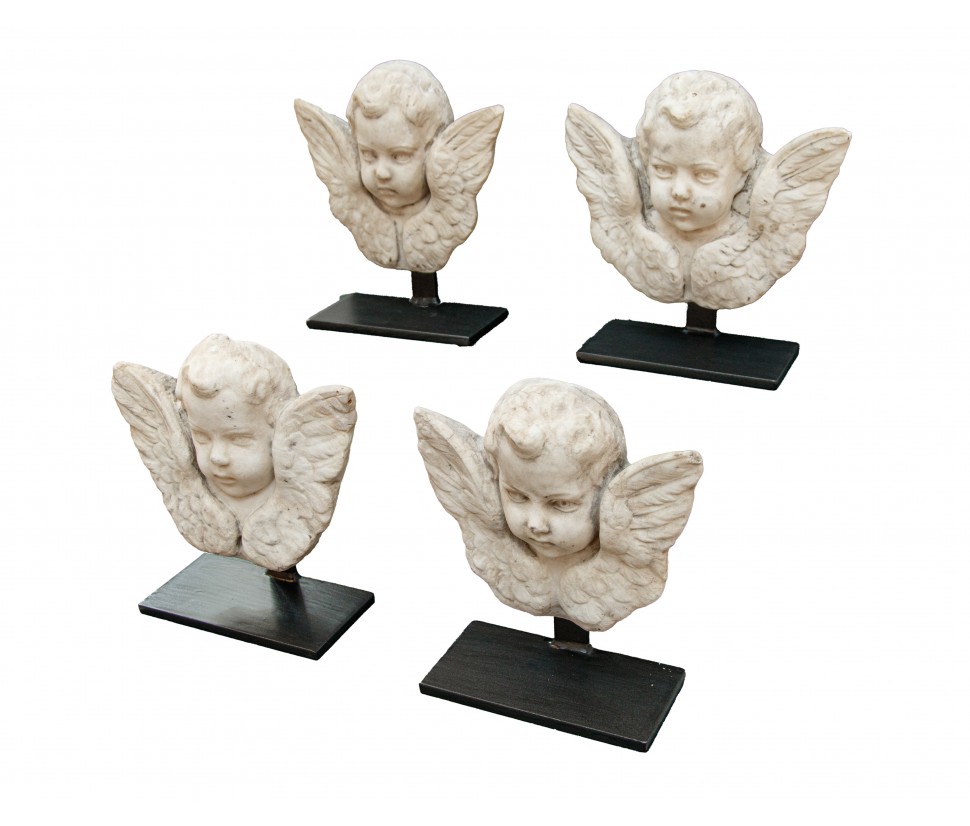
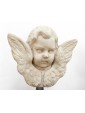
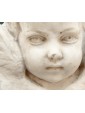
Heads of Cherubim
Marble, 28 x 26 x 10 cm
Circle of Giacomo Serpotta (Palermo, 1656 – 1732)
Heads of Cherubim
Marble, 28 x 26 x 10 cm
Circle of Giacomo Serpotta (Palermo, 1656 – 1732)
Circle of Giacomo Serpotta (Palermo, 1656 – 1732)
Heads of Cherubim
Marble, 28 x 26 x 10 cm
Giacomo Serpotta (born Giacomo Isidoro Nicolò Serpotta) was born in the Kalsa district of Palermo on March 10, 1656. The neighborhood had long been a favored location for marmorari (marble-workers) due to its proximity to the port where precious materials arrived. The second son of Gaspare Serpotta and Antonina Travaglia, Giacomo belonged to a family deeply embedded in the artistic circles of Baroque Palermo for generations; both his father and grandfather were active sculptors and marble-workers, cited as authors of some of the city’s finest sculptural and pictorial works.
Trained alongside his brother Giuseppe in the paternal workshop, Serpotta spent almost his entire life within the alleys of Palermo. He dedicated himself to specializing in a technique that he brought to unsurpassed heights: the so-called "allustratura." Through this process—which involved the use of marble dust and egg white—his sculptures replicated a controlled reflectance and a visual density similar to porcelain, effectively neutralizing the natural porosity of the stucco or marble. Serpotta’s work represented the technical pinnacle of sculpture within the European Baroque and Rococo landscape, embracing a modular and dynamic plasticity.
His artistic evolution is best understood within the context of Palermo’s confraternities and oratories—architectural spaces he transformed through a total integration of structure and plastic decoration. His most significant public commissions, such as the Oratorio di San Lorenzo (1699–1706) and the Oratorio del Rosario in Santa Cita (1710–1717), demonstrate a compositional maturity where sacred narrative is fragmented into "teatrini" (perspective dioramas). In these spaces, Serpotta applied laws of optics and foreshortening that were almost architectural in nature, creating fictitious spatial depths that amplified the limited volumes of the walls.
Special attention must be paid to Serpotta’s treatment of cherubim and putti, which in his compositions never serve a merely decorative function but instead act as both structural and psychological devices. From an anatomical perspective, the sculptor abandoned classical idealization in favor of a rigorous realism, carefully considering infantile proportions and the muscular tensions typical of spontaneous movement.
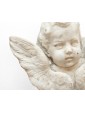
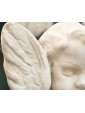
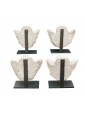
Stylistically, the four marble heads of cherubim examined here can be placed among the works of the master’s circle, as they present features entirely consistent with his production. The rounded facial structure, the pronounced brow arches, and the specific shape of the eyes are, in fact, recurring elements in his oeuvre. Much like in Serpotta’s autograph works, the modeling of the hair and the rendering of the plumage tend toward an almost ethereal lightness, characterized by deep, vibrant undercutting (sottosquadro) that creates a sense of movement and life.
Italy only: with Ars Antiqua it is possible to defer all amounts up to a maximum € 7,500 at ZERO RATE, for a total of 15 INSTALLMENTS.
Unpardoned. Vault. € 4,500 = Monthly instalment € 300 for 15 months.
Unpardoned. Vault. € 3,600 = Monthly instalment € 720 for 5 months.
For amounts greater than €7,500 or for a longer period of time (over 15 installments), we can provide a personalized payment.
Contact us directly to get the best quote.
LIVE TV
– SUNDAY 17.00 – 21.00 Dig.terr. 126 - Sky 824
– Streaming on our site www.arsantiquasrl.com and on our social networks Facebook and Youtube
All the works proposed by Ars Antiqua are sold accompanied by a certificate of authenticity in accordance with the law and an accurate in-depth sheet.
It is possible to see the works directly at the showroom gallery in Milan, in via Pisacane 55 and 57.
We personally organize transport and deliveries of the works, both for Italy and abroad.
