


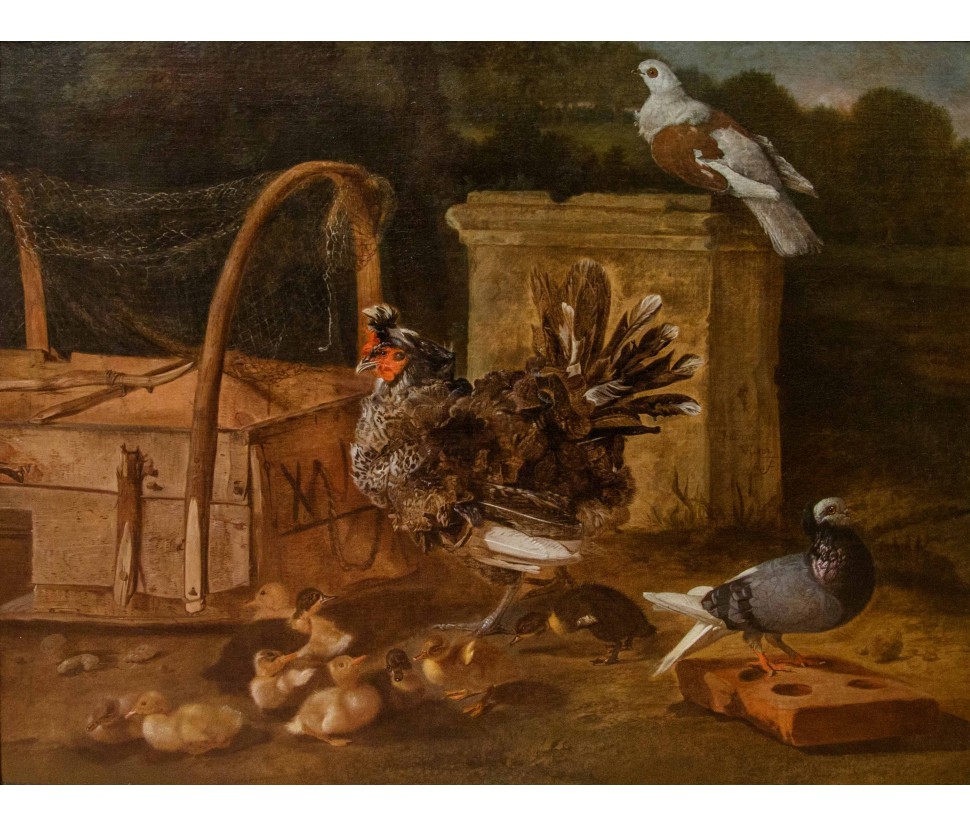
A hen, a pigeon and duckling
Oil on canvas, cm 85 x 106,5
With the frame cm 104 x 123
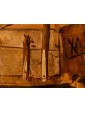
Signed in the center on the pillar Jacomo Victor
Jacobus Victor (Amsterdam, 1640 c. - 1705)
A hen, a pigeon and duckling
Oil on canvas, cm 85 x 106,5
With the frame cm 104 x 123
Signed in the center on the pillar Jacomo Victor
Jacobus Victor (Amsterdam, 1640 c. - 1705)
Jacobus Victor (Amsterdam, 1640 c. - 1705)
A hen, a pigeon and duckling in a barnyard
Oil on canvas, cm 85 x 106,5
With the frame cm 104 x 123
Signed in the center on the pillar Jacomo Victor
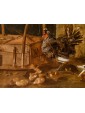
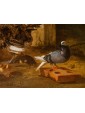
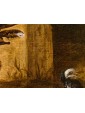
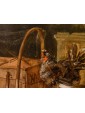
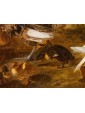
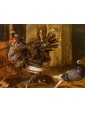
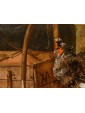
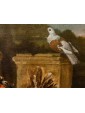
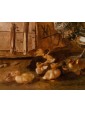
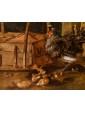
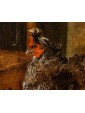
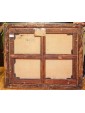
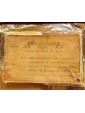
This refined living nature is part of the work of Jacobus Victor, a Dutch painter active in the 17th century who specialized in depicting farmyard animals, pigeons, and birds of various species. The work is part of the solid tradition of vogelstukken, a genre in which the artist excelled thanks to his keen observation skills and meticulous, brilliant rendering of plumage, light reflections, and animal movements. The canvas, signed with the Italianized form of the name—Jacomo Victor—can likely be dated to the 1670s. The scene is set in a farmyard: on the left, part of a wooden birdcage can be seen. In the foreground, a brood of chicks is moving about: overseeing this lively swarm is a hen portrayed in profile, probably an ornamental Frizzle breed hen, characterized by its distinctive curly plumage. The right side of the composition is dominated by two pigeons, a recurring subject in the painter's repertoire (Hamburg, Kunsthalle; Brussels, Royal Museum of Fine Arts): one, with gray plumage, perches on a perforated brick, while the other, with reddish plumage, rests on a fragment of an antique-style base. A soft, diffused light, atmospheric in quality, defines the volumes and makes the surfaces of the feathers vibrate with an almost tactile delicacy. The color ranges, set in shades of gray, brown, and pearl, show the strong influence of Venetian painting, particularly that which in the 17th century influenced many Northern painters attracted by the Bassano tradition and the style of animal painting of Giovanni Agostino Cassana. Jacobus Victors was born around 1640 to Louis Victor and Maria Paeuw; he was the half-brother of the better-known Jan Victors, a pupil of Rembrandt, and brother of the painter Victor Victors. According to critical tradition, Victor trained in the workshop of Jan Baptist Weenix, where he was able to work alongside Melchior Hondecoeter, the great master of bird painting. It is documented that Victor spent time in Italy, probably in the years immediately preceding 1670: he is mentioned in Venice as early as 1663 by Martinioni, who describes him as “Jacopo Fichtor of Holland... admirable in his depiction of flying animals.” On the back of the canvas is a label from Lenygon and Morant Inc., a prestigious Anglo-American company active between the 19th and 20th centuries, renowned for its production of period furniture and its ability to recreate complete interiors. The company, founded by Francis H. Lenygon, distinguished itself by acquiring entire period complexes, including a Dutch Painted Room from Groningen, demonstrating a strong interest in 17th-century Dutch art. The work reveals a harmonious fusion of observation from life and compositional elegance, presenting the viewer with a small rural theater animated by lively and familiar presences.
taly only: with Ars Antiqua it is possible to defer all amounts up to a maximum € 7,500 at ZERO RATE, for a total of 15 INSTALLMENTS.
Unpardoned. Vault. € 4,500 = Monthly instalment € 300 for 15 months.
Unpardoned. Vault. € 3,600 = Monthly instalment € 720 for 5 months.
For amounts greater than €7,500 or for a longer period of time (over 15 installments), we can provide a personalized payment.
Contact us directly to get the best quote.
LIVE TV
– SUNDAY 17.00 – 21.00 Dig.terr. 126 - Sky 824
– Streaming on our site www.arsantiquasrl.com and on our social networks Facebook and Youtube
All the works proposed by Ars Antiqua are sold accompanied by a certificate of authenticity in accordance with the law and an accurate in-depth sheet.
It is possible to see the works directly at the showroom gallery in Milan, in via Pisacane 55 and 57.
We personally organize transport and deliveries of the works, both for Italy and abroad.
