


Ecce Agnus Dei
Oil on canvas, cm 163 x 115
With frame, cm 186 x 138,5
Rubensian school of the XVII century
Ecce Agnus Dei
Oil on canvas, cm 163 x 115
With frame, cm 186 x 138,5
Rubensian school of the XVII century
Rubensian school of the XVII century
Ecce Agnus Dei
Oil on canvas, cm 163 x 115
With frame, cm 186 x 138,5
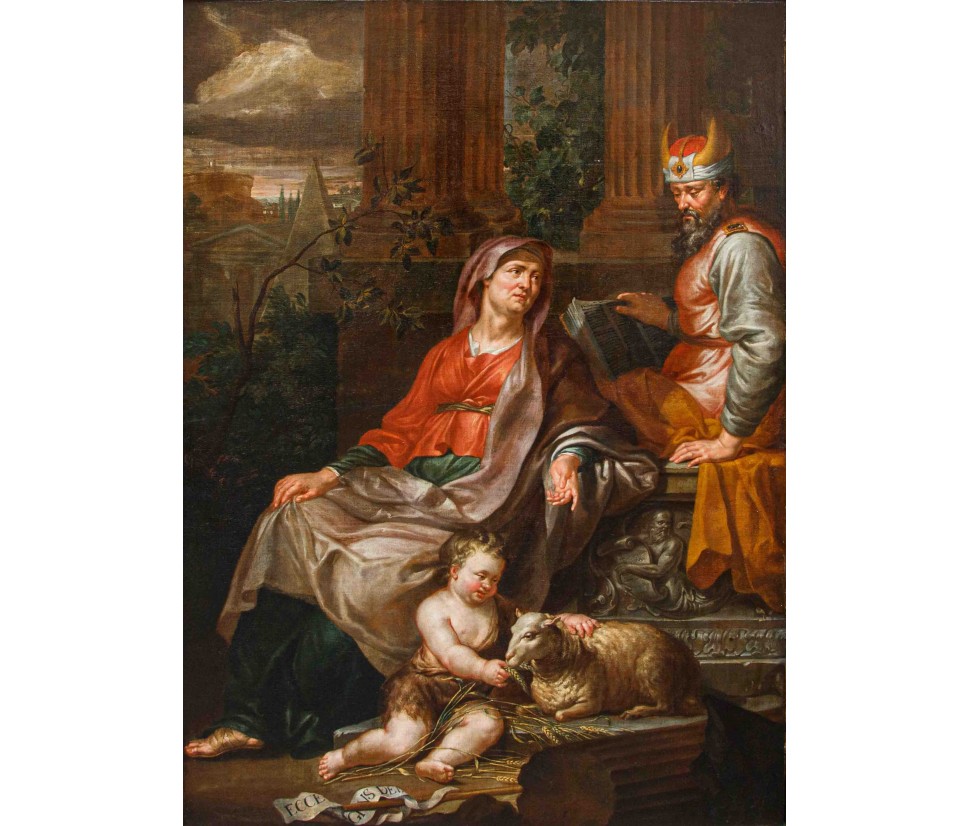
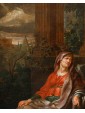
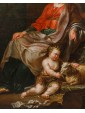
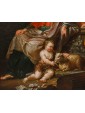
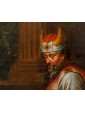
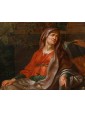
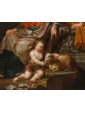
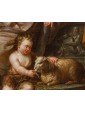
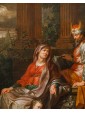
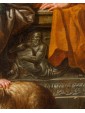
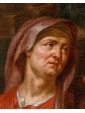
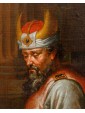
The characters that appear represented in this canvas of Rubensian taste are Saint Elizabeth, San Zaccaria and the son John Baptist, last prophet of the Old Testament. The scene, with its marked symbolic gradient, perfectly represents the passage between the Aethic and the New Testament. In addition, the Roman ruins in the background and the broken column are a reference to the domination of the Roman Empire over Palestine which is about to come to an end according to the beginning of a new era, that of Christ. Zechariah was a Jewish priest of the class of Abijah, married to Elizabeth, also a descendant of Aaron. Both were righteous before God, and they kept irreproachably all the laws and prescriptions of the Lord. Yet their lives were marked by a great affliction: they had no children, for Elizabeth was barren, and both of them were old. Sterility at that time was considered a great shame and a sign of divine disfavor. One day, while Zechariah was performing his priestly service in the Temple of Jerusalem, he was lucky enough to enter the Holy Place to offer incense. This was a once-in-a-lifetime opportunity for a priest. While he was inside, an angel of the Lord appeared to him, Gabriel, standing at the right hand of the altar of incense. Zechariah was troubled and taken by fear at the sight of the angel. But Gabriel said to him: "Do not fear, Zechariah, your prayer has been answered and your wife Elizabeth will give you a son, and you will call him John." The angel continued, explaining that John would be great before the Lord, full of the Holy Spirit from the womb of his mother, And he would lead many children of Israel back to the LORD their God, leading him with the spirit and power of Elijah to prepare a people for the LORD. Despite the divine promise, Zechariah, perhaps overwhelmed by incredulity given his advanced age and the sterility of his wife, asked the angel: "How can I ever know this? I am old and my wife is over the years". Because of this doubt, the angel Gabriel answered him: "I am Gabriel, who stand before God and have been sent to speak to you and to bring you this glad tidings. And behold, thou shalt be dumb, and thou shalt not speak until the day when these things shall come to pass; for thou hast not believed my words, which shall be fulfilled in their time."
When Zechariah came out of the Temple, the people who were waiting outside marveled at his delay. Not being able to speak, Zechariah waved to them and remained silent, and they understood that in the Temple he had a vision. After completing the days of his service in the Temple, Zechariah returned home. Shortly thereafter, Elizabeth conceived and hid for five months, recognizing the grace that the Lord had given her. At the seventh month of Elizabeth’s pregnancy, the angel Gabriel announced to Mary the birth of Jesus. When Elizabeth gave birth to a son, the neighbors and relatives rejoiced with her. On the eighth day, when they came to circumcise the child and call him by his father’s name, Zechariah, Elizabeth opposed it, saying: "No, he will be called John." They objected, because no one in their family had that name. So they beckoned to Zechariah to know what he wanted to call the child Zechariah asked for a tablet and wrote: "His name is John." And at that very moment, his mouth opened, his tongue melted and returned to speak, praising God. All were taken with fear and the news spread throughout the region of Judea, leading people to ask themselves: "What will this child be?". This episode highlights the faithfulness of God to his promises and the consequence of the doubt of Zechariah, who through mutism was led to a contemplative silence and the expectation of the fulfillment of the divine word. Its history serves as a prologue to the coming of the Messiah and his precursor, John the Baptist.
With Ars Antiqua it is possible to defer all amounts up to a maximum of € 7,500 at ZERO RATE, for a total of 15 RATES.
Ex. Tot. € 4.500 = Monthly instalment € 300 for 15 months.
Ex. Tot. € 3.600 = Monthly instalment € 720 for 5 months.
For amounts over € 7,500 or for a longer delay in time (more than 15 installments), we can provide a personalized payment.
Contact us directly to get the best quote.
LIVE TV
- SUNDAY 17.00 - 21.00 Dig.terr. 126 - Sky 824
- Streaming on our website www.arsantiquasrl.com and on our social networks Facebook and Youtube
All the works proposed by Ars Antiqua are sold with a certificate of authenticity according to law and an accurate detailed information sheet.
You can see the works at the gallery showroom in Milan, in via Pisacane 55 and 57.
We personally organize transport and delivery of the works, both for Italy and abroad
