


Mirror
Gilded wood and mercury mirror, cm 138 x 80
Light, cm 59 x 44
18th century, Louis XVI, Naples
Mirror
Gilded wood and mercury mirror, cm 138 x 80
Light, cm 59 x 44
18th century, Louis XVI, Naples
18th century, Louis XVI, Naples
Mirror
Gilded wood and mercury mirror, cm 138 x 80
Light, cm 59 x 44
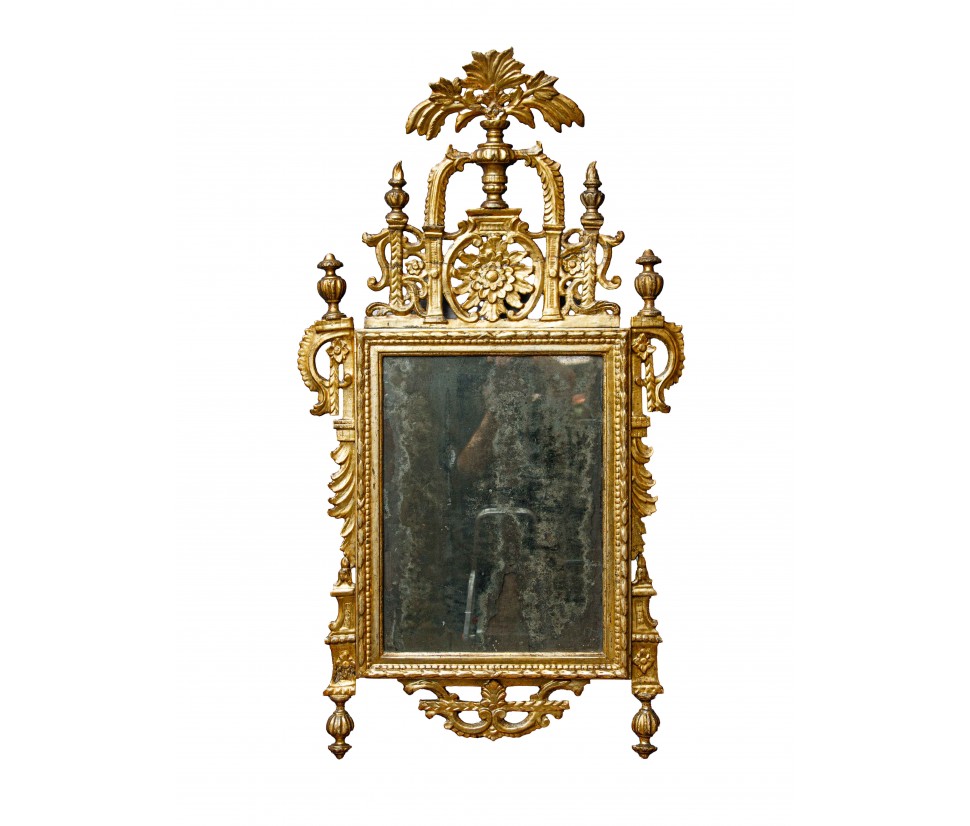
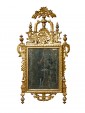
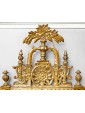
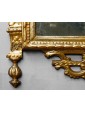
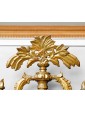
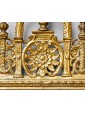
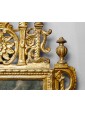
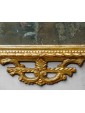
This refined mirror, a masterpiece of 18th-century Neapolitan cabinet making, embodies the elegance and majesty of the Louis XVI style. The frame, richly carved and gilded, has a harmonious and symmetrical design, characterized by floral and foliacal patterns that are interlaced with taste. In the centre of the cimasa, a sculptural composition of great effect depicts a rich vow that culminates in a decorative element in the form of a stylized flower, symbol of refinement and opulence. The edges of the mirror are adorned with a series of small volutes and a delicate beaded border, which give the work an air of lightness and refinement. The uniform and brilliant golden patina enhances the beauty of the sculptures and gives the object an aura of preciousness.
The Louis XVI style, which developed in France during the reign of Louis XVI (1774-1792), is one of the most refined and sophisticated expressions of neoclassical taste. Characterized by simple and pure lines, balanced proportions and a rich decoration based on geometric and floral patterns, this style is distinguished by our sober elegance and its attention to detail. The shapes are essential and geometric, inspired by ancient art, while the decorations are often inspired by nature, with the use of garlands, festoons, rosettes and leaf motifs.
The mirror in question is a perfect example of this style: its simple and pure lines, balanced proportions, decorations based on floral motifs and gold patina are all typical elements of the Louis XVI taste. This work, the result of the skill of a skilled cabinetmaker, embodies the ideal of beauty and refinement that characterized the aristocracy of the eighteenth century.To further emphasize the very high quality there is the mercury mirror inside. The mercury mirror, precursor of modern silver mirrors, is a fascinating testimony to human ingenuity and technological evolution. The technique of obtaining a reflective surface by depositing mercury over a series of carefully polished layers of tin, previously placed on the glass surface, revolutionized the mirror market.
The first examples made with this technique date back to the sixteenth century and were the result of the research of the Venetian glass masters. The quality of the mirrors thus obtained was so superior to that allowed by previous technologies that the Serenissima placed under secret processing. Despite the threat of very severe penalties, there were also leaks of information, so much so that in the seventeenth century mercury mirrors were made in France, even if of lower quality than the Venetian. The famous Mirror Gallery of the Château de Versailles is decorated with hundreds of mercury mirrors made by the Saint-Gobain manufacture, a famous glassworks that still produces glass and crystals for various uses under the same name. The mercury mirror gave way in the 19th century to the mirror where the reflective effect was obtained by using tin and aluminium, thanks to the invention of the German chemist Justus von Liebig.
With Ars Antiqua it is possible to defer all amounts up to a maximum of € 7,500 at ZERO RATE, for a total of 15 RATES.
Ex. Tot. € 4.500 = Monthly instalment € 300 for 15 months.
Ex. Tot. € 3.600 = Monthly instalment € 720 for 5 months.
For amounts over € 7,500 or for a longer delay in time (more than 15 installments), we can provide a personalized payment.
Contact us directly to get the best quote.
LIVE TV
- SUNDAY 17.00 - 21.00 Dig.terr. 126 - Sky 824
- Streaming on our website www.arsantiquasrl.com and on our social networks Facebook and Youtube
All the works proposed by Ars Antiqua are sold with a certificate of authenticity according to law and an accurate detailed information sheet.
You can see the works at the gallery showroom in Milan, in via Pisacane 55 and 57.
We personally organize transport and delivery of the works, both for Italy and abroad.
