


Sibilla cumana and Sibilla eritrea
(2) Oil on canvas, cm 38x30
With frame, cm 50x40
XVIII century
Sibilla cumana and Sibilla eritrea
(2) Oil on canvas, cm 38x30
With frame, cm 50x40
XVIII century
XVIII century
Sibilla cumana and Sibilla eritrea
Oil on canvas, cm 38x30
With frame, cm 50x40
In the ancient world there were many soothsayers and prophets who made predictions in the name of a god. At the oracular sites, it was widely believed that there were many female interpreters of the divine word, not subject to the passage of time, isolated from the world and not inclined to show themselves to human eyes; these were the Sibyls. The Pythia of Delphi is the best known case, but the Latin writer Marco Terenzio Varrone (116-27 BC) listed ten of them: the persiana, the eritrea (from Eritre, in Lidia), the ellespontia, the frigia, the cimmeria, the libica, the delfica, the samia, the cumana and the tiburtina (some pictured by Michelangelo in the Sistine Chapel). Some even thought that it was a single, immortal Sibyl who moved to different places. The Sibilla Cumana is one of the most fascinating figures that emerge from Latin literature: the texts written by her pungo, handed over, according to tradition, by the prophetess to Tarquinius the Superb, and preserved at the Capitol were perceived as a fundamental reference for the Kings of Rome and later for the leading figures of the Roman Republic. Following the Christianization of the Roman Empire, this figure, reseminated, is presented in the scriptures as a predictor of the coming of Christ.
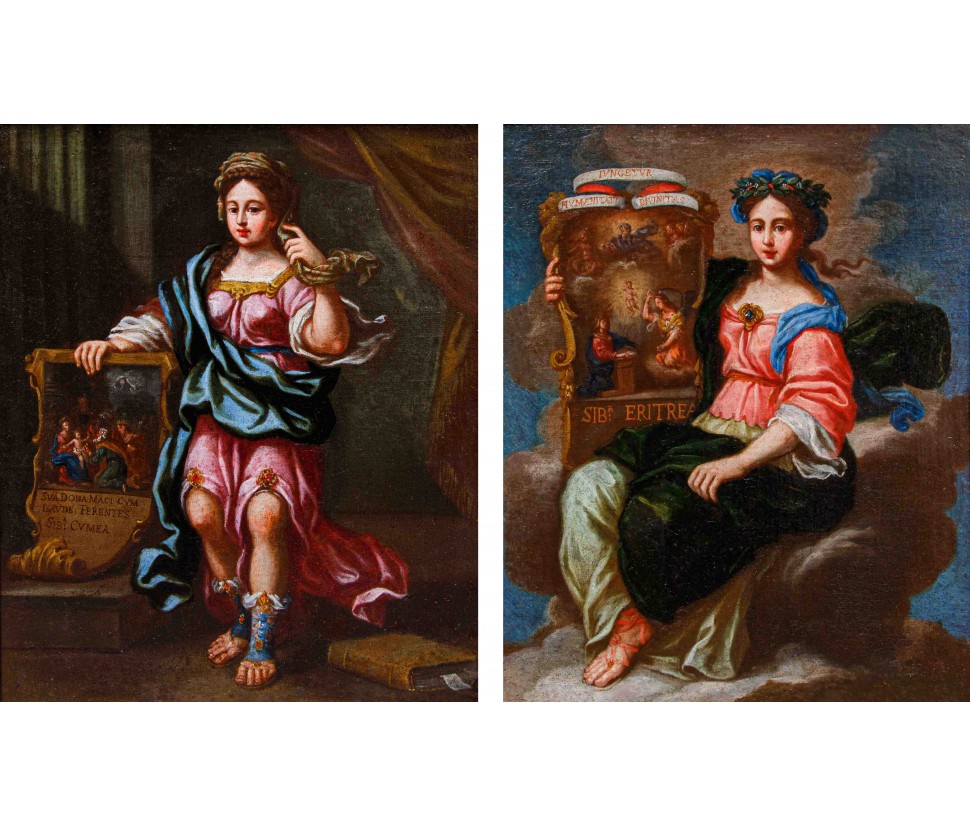
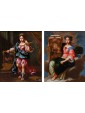
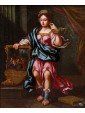
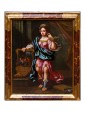
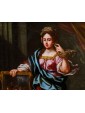
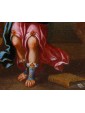
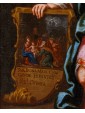
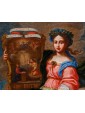
In our painting the sibyl is represented standing: in her hands holds a banner depicting the adoration of the magi, crucial event for the history of humanity that the priestess is anticipating through the prophecy that describes the scene and, at the same time, predicts it: "SUA DONA MAGI CUM LAUDE FERENTES", that is the Magi carrying their gifts with honor.This short prophecy, which would be completed with objicient puero myrham, aurum, thura sabae, or will show the child myrrh, gold, incense sabeo, has also been associated with the sybilla Cimmeria over the centuries but tendentially in artistic depictions was associated with cumana, which therefore approaches the image of the adoration of the Magi. To further confirm the prophetic power of the Sybil we find at his feet, on the right of the composition, one of the mythical books that collected the fundamental predictions related to the developments of the history of Rome and Christianity. The draped clothes and the serene but, at the same time, extremely determined gaze directed to the observer contribute to give an impression of absolute authority to this mystical and intriguing character.
The figure of the Eritrean Sibyl was venerated since ancient times: it was one of the most obsequiate prophetesses of the ancient world, linked to the oracle of Apollo in Erythrae. His prophecies were considered divinely inspired. The Christian Church included it among the twelve Sibyls who prophesied the advent of Jesus Christ, integrating it in a broader narrative of the history of salvation: among the attributes of its representation, already from the Middle Ages, there is in fact the parchment, which often contains verses referring to the Incarnation of Christ or lenticular representations of the scene of the Annunciation.
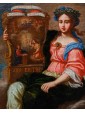
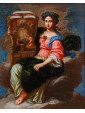
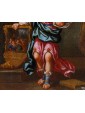
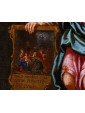
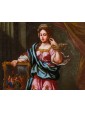
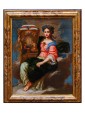
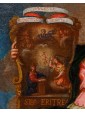
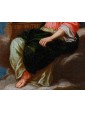
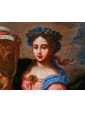
The painting in question portrays a seated female figure, identifiable as the Sibilla Eritrea thanks to the inscription "SIB ERITREA" visible on the wooden base on which is set a wooden frame within which is precisely depicted the Annunciation. The Sibyl is represented with a pensive and serene expression. She wears a dress with wide sleeves in salmon pink, draped with a light blue fabric on her shoulders. A golden brooch with a central stone decorates his chest. The lower part of her dress is a velvety dark green, and her legs are covered by a lighter cloth, perhaps white or ivory, which gently curls. At the feet she wears reddish sandals that tie around her ankles. Her head is adorned with a crown of blue flowers and green leaves, and her brown hair is partly gathered behind the nape. His gaze is slightly to the right, giving a sense of contemplation. In the upper section of the large rolls of parchment on wooden scaffolding there are three cartouches bearing the words "HUMANITATI", "IUNGETUR" and "DIVINITAS", terms that if read together translate with the divinity joins humanity. In the Christian tradition, in fact, the Eritrean Sibylle is attributed a prophecy about the birth of the Redeemer and, more generally, the Redemption of humanity; In accordance with the prophecy in the aedicule is represented an Annunciation with the descent of the Holy Spirit and the Child to the Virgin who is receiving the announcement from the archangel Gabriel. Finally, if we consider the word "DIVINITAS", it can also be interpreted as divination or gift of prophecy, thus giving a nuance of meaning close to the role of the effigy.
With Ars Antiqua it is possible to defer all amounts up to a maximum of € 7,500 at ZERO RATE, for a total of 15 INSTALLMENTS.
Ex. Tot. € 4.500 = Monthly instalment € 300 for 15 months.
Ex. Tot. € 3.600 = Monthly instalment € 720 for 5 months.
For amounts over € 7,500 or for a longer delay in time (more than 15 installments), we can provide a personalized payment.
Contact us directly to get the best quote.
LIVE TV
- SUNDAY 17.00 - 21.00 Dig.terr. 126 - Sky 824
- Streaming on our website www.arsantiquasrl.com and on our social networks Facebook and Youtube
All the works proposed by Ars Antiqua are sold with a certificate of authenticity in accordance with the law and a detailed information sheet.
You can see the works directly at the gallery showroom in Milan, in via Pisacane 55 and 57.
We personally organize transport and delivery of works, both for Italy and abroad.
