


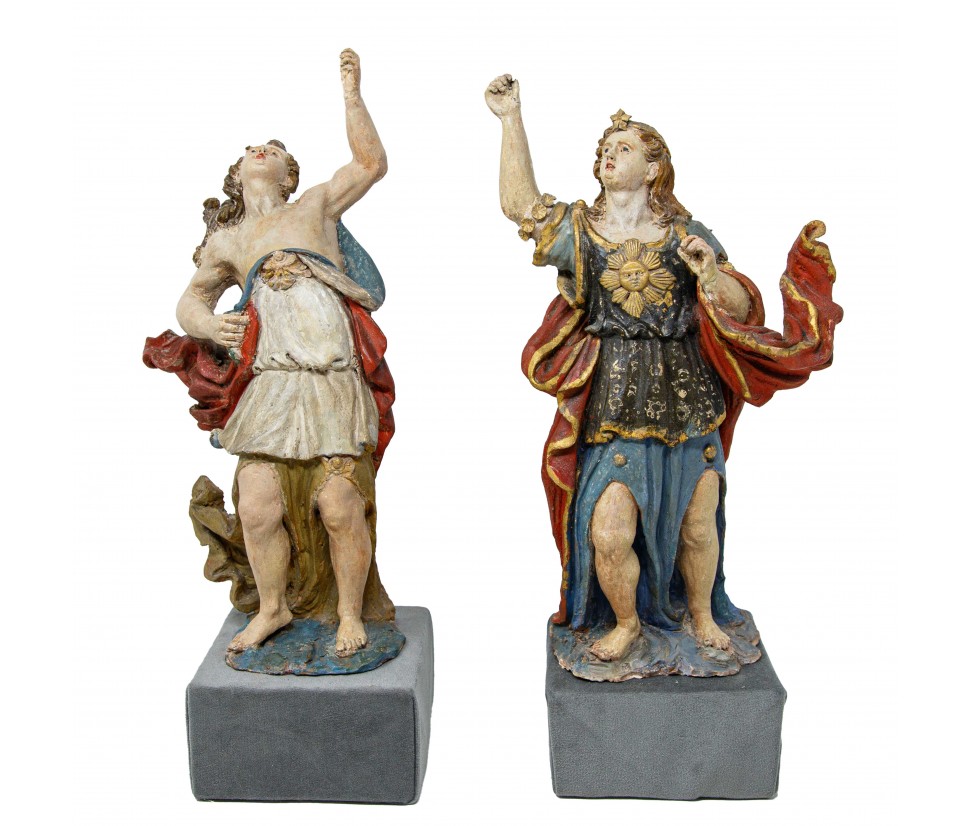
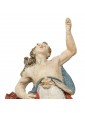
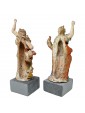
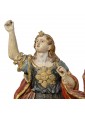
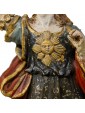
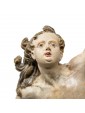
Pair of allegorical figures
Terracotta polychrome, cm alt. 30
Late 17th century
Pair of allegorical figures
Terracotta polychrome, cm alt. 30
Late 17th century
Late 17th century
Pair of allegorical figures
Terracotta polychrome, cm alt. 30
The word terracotta has been used since the Renaissance to describe the products and artistic products obtained from clay baked in the oven. The process of modelling the earth, a material that can be found everywhere and of obvious plastic qualities, was one of the first implemented in the artistic-creative human; it was indeed within the reach of primitive mentality to recognize the innumerable practical purposes to which one could lend clay made malleable by water and then desiccated. The production of terracotta, started since the most remote antiquity, had a great fortune in the early Renaissance, as shown by the famous rime works of Donatello, Rossellino and the workshop Della Robbia. During the Baroque period, the use of terracotta as a decorative element continued in regions where the artistic tradition was stronger and older in this sense - for example in Emilia-Romagna, Campania and Sicily - but it was often supplanted by that of stucco.
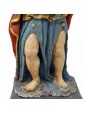
These two sculptures are a good example of the use of terracotta in the artistic field in the late Baroque period. The two figures, whose clothes are enriched with precious gilding, are supporters of that dynamism proper to the art of the seventeenth and early eighteenth century. The two terracotta figurines are also animated by the swirling draperies of the robes, which seem to float in the wind: the performer of the two statuettes is able to deal with particular skill with the material with which he works. The flamboyant polychromy of the garments highlights the great technical skill of the performer, who is able to juggle skillfully even with the discipline of painting.
