


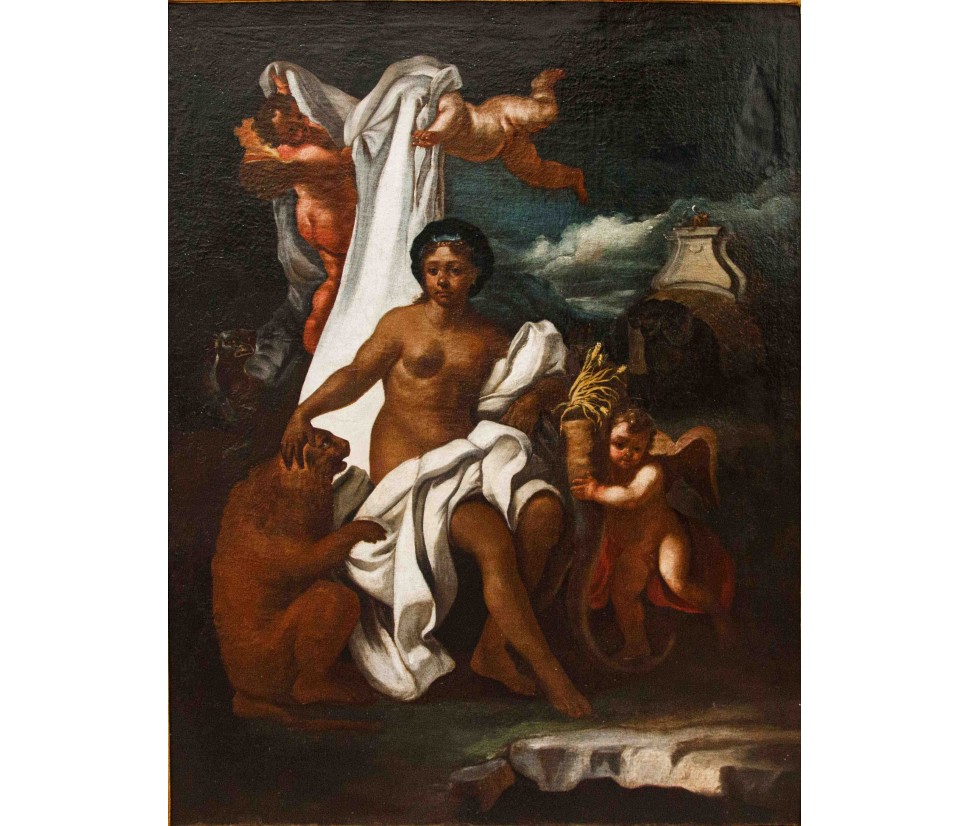
Allegory of Africa
Oil on canvas, cm 120 x 90
With frame, cm 144 x 110
Neapolitan school, 17th century
Allegory of Africa
Oil on canvas, cm 120 x 90
With frame, cm 144 x 110
Neapolitan school, 17th century
Neapolitan school, 17th century
Allegory of Africa
Oil on canvas, cm 120 x 90
With frame, cm 144 x 110
During the 16th century, the trend had developed to divide the world into four continents: Africa, America, Asia and Europe. Each of the continents represented one of the world’s quadrants and corresponded to a cardinal point: Europe the north, Asia the east, Africa the south and America the west. This division of continents well suited the rigorous Renaissance mentality of the time, which had divided the world into four seasons, four elements, four cardinal points, four classical virtues and so on. From the 16th to the 18th century, the personifications of the four continents were an artistic theme that enjoyed wide popularity, from painting to sculpture, from prints and engravings to porcelain services. These personifications could be found on four-sided monuments (such as the Fountain of the Four Continents in Trieste and the monument to Cervantes in Madrid) or in front of a single façade. The personified continents very often had feminine attributes and their appearance was based on an iconography representing each continent: Europe was dressed elegantly and with royal clothes, Asia was dressed in exotic clothes, Africa and America were semi-clothed and were characterized by various exotic attributes.The key reference for artists in the elaboration of this type of images was the text by Cesare Ripa, Iconologia of 1603. Here Africa is described as a woman wearing an elephant-head headgear and accompanied by some animals, such as the lion, the desert scorpion and the asps. It holds a cornucopia in its hand, which symbolizes the fertility and abundance of some parts of the continent. Other depictions of the Renaissance and Baroque period represent semi-naked or nude Africa, symbolizing the European perception of the era of Africa as an uncivilized and wild land. Some iconographies of the work of Cesare Ripa depict Africa with light skin, but later the representation with dark skin spread, because it identified better the continent than the other four.
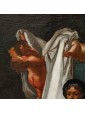
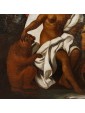
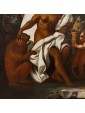
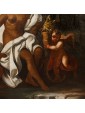
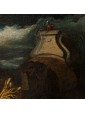
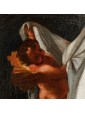
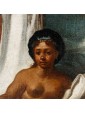
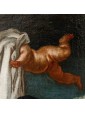
The allegory of Africa proposed here, modeled on Francesco Solimena, mixes the above-mentioned iconographic traditions: the female figure in the center is in fact just covered by a white drape, supported by two putti whose face has the veil itself covered. She is joined by a third putto, which holds the usual cornucopia and an exotic animal, a lion. The elephant is not called by the headdress as for Cesare Ripa, but it is present in the background.
With Ars Antiqua it is possible to defer all amounts up to a maximum of € 7,500 at ZERO RATE, for a total of 15 RATES.
Ex. Tot. € 4.500 = Monthly instalment € 300 for 15 months.
Ex. Tot. € 3.600 = Monthly payment € 720 for 5 months.
For amounts over € 7,500 or for a longer delay in time (more than 15 installments), we can provide a personalized payment.
Contact us directly to get the best quote.
TV Direct
- SUNDAY 17.00 - 21.00 Dig.terr. 126 + 809 SKY
- Streaming on our website www.arsantiquasrl.com and on our social networks Facebook and Youtube
All the works proposed by Ars Antiqua are sold with a certificate of authenticity according to law and an accurate detailed information sheet.
You can see the works at the gallery showroom in Milan, in via Pisacane 55 and 57.
We personally organize transport and delivery of works, both for Italy and abroad.
