


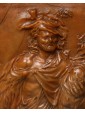
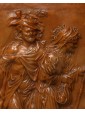
Couple of beggars
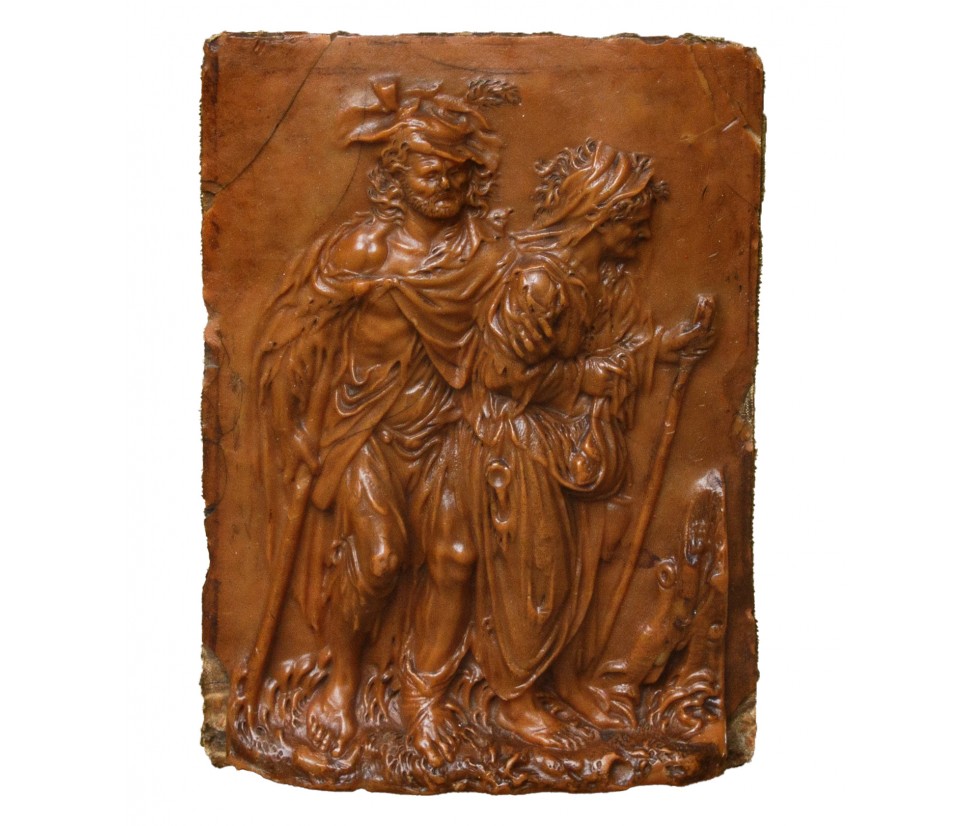
Wax relief, cm 16 x 12
Leonhard Posch (Fuegen, 1750 - Berlin, 1831) (attr.)
Couple of beggars
Wax relief, cm 16 x 12
Leonhard Posch (Fuegen, 1750 - Berlin, 1831) (attr.)
Leonhard Posch (Fuegen, 1750 - Berlin, 1831) (attr.)
Couple of beggars
Wax relief, cm 16 x 12
Born in Fuegen, a rural town in central Austria, in 1750, at the age of 16, in 1766, Leonhard Posch began his artistic training at the workshop of the Bavarian sculptor Johann Baptist Hagenauer in Salzburg. Hagenauer, Posch’s master, was a particularly well-established figure in the Austrian art scene of the second half of the 18th century: the sculptor was in fact responsible for decorating the facade of the Salzburg Cathedral and for the execution of most of the statues adorning the gardens of the colossal Palace of Schönbrunn in Vienna; it is this distinguished master who gave Posch the rudiments of sculpture, Passing on to him also his visual imagery rich in references to Italian art. Following the death of Hagenauer, Posch moved to Vienna, where he attended, around the middle of the 70s of the '700, various courses at the Academy.
Following a debilitating disease that hit him in the late 70s, Posch, unable to make physical efforts, he dedicated himself solely to modeling wax, reaching in this art levels of excellence. In particular, His fine wax medals were particularly appreciated by the Viennese nobility of the time: Suffice it to say that among the most distinguished clients of the artist was the Austrian emperor Francis II. The great success of his works in native land prompted the artist to move to Berlin: Here he received commissions of enormous importance and realized some of his most famous works, among which the wax medals of Mozart (1788-1789), of Napoleon (1814) and of Goethe (1827). Many of his portrait models were intended for the royal iron foundry in Berlin and the Gleiwitzer Hütte, the Prussian royal foundry which had its headquarters in Gleiwitz, Upper Silesia. Posch in Berlin received a great deal of recognition and In his old age, he was appointed to the chair of sculpture at the Academy of Prussian Arts.
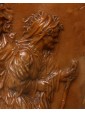
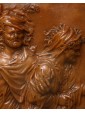
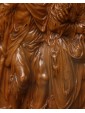
In this wax, probably inspired by the cycle of engravings of the Mendicants of Callot, Posch depicts a couple destitute in an extremely realistic way, Showing fully his ability to represent not only the nobles and the wealthy but also the figures belonging to the lower fringes of society of his time.
