


Annunciation
Oil on board, cm 54.5 x 46
With frame cm 69 x 62
17th century, Spanish School
Annunciation
Oil on board, cm 54.5 x 46
With frame cm 69 x 62
17th century, Spanish School
17th century, Spanish School
Annunciation
Oil on board, cm 54.5 x 46
With frame cm 69 x 62
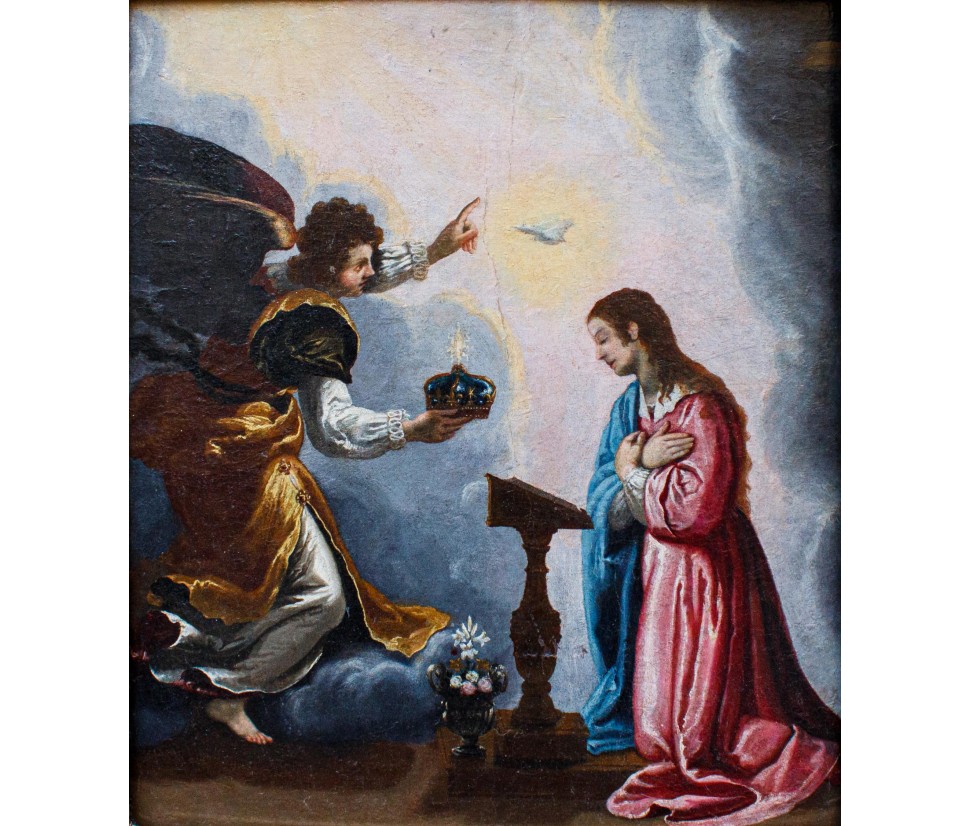
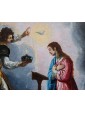
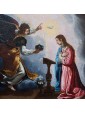
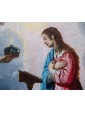
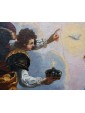
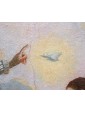
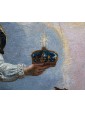
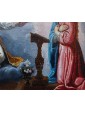
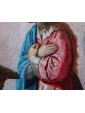
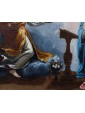
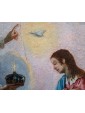
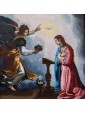
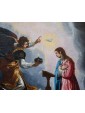
In this Annunciation the archangel Gabriel is a carrier of an innovative symbolism, rarely adopted: instead of the traditional virginal lily, the divine misso ostenta to the Virgin a precious golden crown with the shell lined blue night, above which shines the sun, symbol of divine conception. The simultaneous descent of the Holy Spirit from heaven, which the archangel indicates, contributes to make explicit the role of Mary as future Queen of Heaven in her capacity as mater Dei. The figurated instant is that in which the Virgin, seen the approaching of the archangel, perceives its fiery spirit and lowers his gaze, not able to support so much divine beauty. The only concrete hint to the daily context is the lectern with the volume that Maria was reading candidly, left in half for Gabriele, and the pretty bronze vase on the peduccio embellished with delicate roses and a sprig of lily.
The strikingly shaded design line and brilliant colour make it possible to match this table with the Spanish production of the 17th century. The particular choice of clothes worn by the archangel, precious swaggy and with a specific decorative flap at the end of the sleeve, is another indication of the cultural context of reference. The 17th century was named by the Spanish historiographic and artistic critics the Siglo de Oro of national painting, because of the temporary cultural isolation of the territory resulting from the intensification of religious fervour. The artistic context did not fail to incorporate models from nearby Italy and Flanders, however in this period was coded that language with strong plastic expression that characterizes also the present. It is enough to recall the choral work of the most important artistic fringe at the monastery of El Escorial, wanted by Philip II as sanctuary of the controriformata art, which determined an alignment of the main taste.
Consider the Annunciation by Bartolomé Estaban Murillo, circa 1660, now in the collections of the Prado. The canvas, which was purchased in 1729 to celebrate the marriage between Elizabeth Farnese and Philip V of Spain, is symptomatic of the effervescent Spanish baroque season, which here reproposes the same figurative effects. Also remember the Annunciation by Francisco de Zurbarán (1598-1664), between 1638-1639, now in the Museum of Grenoble.
The object is in good condition
With Ars Antiqua it is possible to defer all amounts up to a maximum of € 7,500 at ZERO RATE, for a total of 15 RATES.
Ex. Tot. € 4.500 = Monthly instalment € 300 for 15 months.
Ex. Tot. € 3.600 = Monthly payment € 720 for 5 months.
For amounts over € 7,500 or for a longer delay in time (more than 15 installments), we can provide a personalized payment.
Contact us directly to get the best quote.
TV Direct
- SUNDAY 17.00 - 21.00 Dig.terr. 126 + 809 SKY
- THURSDAY 21.00 - 24.00 Dig.terr. 125 + 809 SKY
- Streaming on our website www.arsantiquasrl.com and on our social networks Facebook and Youtube
All the works proposed by Ars Antiqua are sold with a certificate of authenticity according to law and an accurate detailed information sheet.
You can see the works at the gallery showroom in Milan, in via Pisacane 55 and 57.
We personally organize transport and delivery of works, both for Italy and abroad.
