


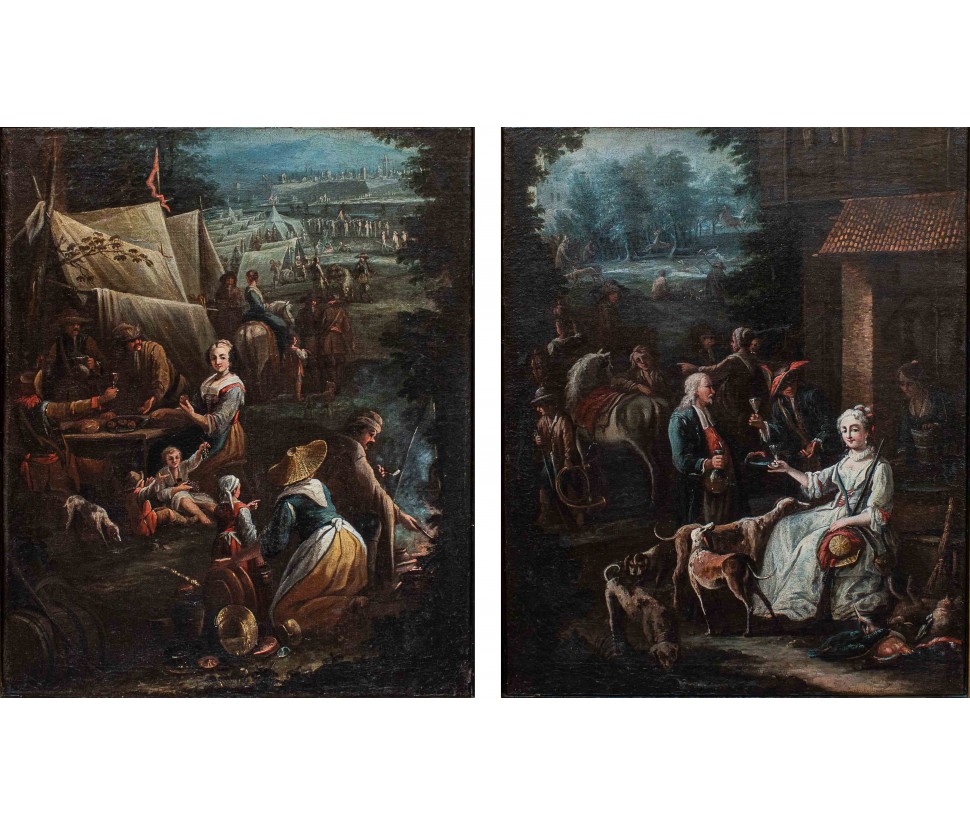
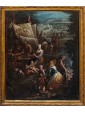
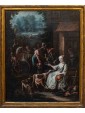
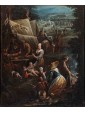
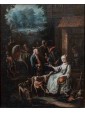
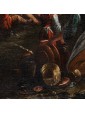
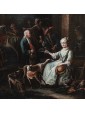
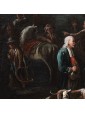
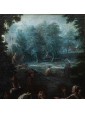
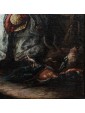
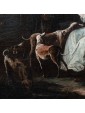
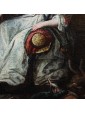
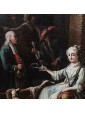
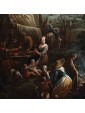
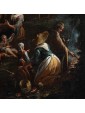
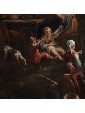
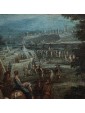
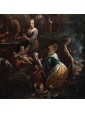
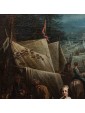
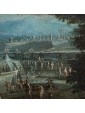
Hunting rest - Camp scene
(2) Oil on canvas, cm 85 x 66
With frame cm 90 x 71 x 4
Angela Maria Pittetti, known as Palanca (Palancato, 1690 - Torino, 1763)
Hunting rest - Camp scene
(2) Oil on canvas, cm 85 x 66
With frame cm 90 x 71 x 4
Hunting rest - Camp scene
(2) Oil on canvas, cm 85 x 66
With frame cm 90 x 71 x 4
Angela Maria Pittetti, known as Palanca (Palancato, 1690 - Torino, 1763)
Hunting rest - Camp scene
(2) Oil on canvas, cm 85 x 66
With frame cm 90 x 71 x 4
Angela Maria Pittetti, known as Palanca (Palancato, 1690 - Torino, 1763)
Hunting rest - Camp scene
(2) Oil on canvas, cm 85 x 66
With frame cm 90 x 71 x 4
The pair of canvases, given the manifest stylistic and formal consonances, highlights the hand of Angela Maria Pittetti, called Palanca, one of the most interesting pictorial personalities of the '700 Piedmontese. Artist of considerable talent, was one of the best students of the great painter of bambocciate Pietro Domenico Ollivero, whose sources of the time recall numerous students; some famous as the Graneri and precisely the Palanca.
Pittetti, originally from a small town above Varallo Sesia, Palancato (hamlet of Boccioleto), from which the nickname Palanca, was born in a family dedicated to art, owning a workshop where they manufactured and worked objects made of wood and ivory. When she married very young, in 1711, she must have already been a painter appreciated since her dowry, also signed by Ollivero, includes 165 paintings, sketches and sketches. The marriage was not intended to last long; in 1716, in fact, with a decision for those times very brave, she left her husband who mistreated her and returned to live in Turin. He will soon specialize in interesting genre scenes, where there is a French influence, characterized by the presence of ladies, gentlemen, knights or so-called bambocciate scenes for which the master was famous, in which it is always highlighted a deep research and attention to the clothes, the costume, the fashion of the time, the details such as hairstyles, all combined with a particular attention to poses and gestures that give great vitality and freshness to his work. Pittetti was a appreciated painter and asked for important commissions as evidenced by some payment receipts for paintings made for the Palazzina di Caccia di Stupinigi.
Angela Maria Pittetti’s painting is always easily recognizable for its precise stylistic figure. The artist painted essentially delicious genre scenes in the French style, but declined in a more ironic Italian version. In his paintings are also evident, in addition to the influences of Pietro Domenico Ollivero, those of Scipione Cignaroli, Domenico Gambone and Carlo Filippo Brambilla; but also of Italian Flamingoes, such as Teodor Helmbreker and Pietro Maurizio Bolkman. Pittetti’s creativity was also inspired by the works of Watteau and Teniers, but also by those of Jean-Baptiste Oudry and certain canvases by Natoire.
His works, as in those analyzed, are traced a meticulous completeness and attention to detail, with vaporous backgrounds that refer to the contemporary French tradition as an idea, along with the Cignaroli as a rendering. In the pair of works examined, we find links with the mundane characters typical of his pictorial production, such as the attention to contemporary fashion, particularly evident in the lady portrayed in the foreground during the rest of the hunt, and the gestuality narrative. The two scenes, set in two different contexts, one related to the activities of the aristocracy, with the hunting trip, and the other to a scene of bivouac in a camp, are united by the common gesture of the toast declined in a case, Calmly, by the delicate damina in the foreground, energetically instead of the soldier portrait of shoulders.
The works, which are the subject of study here, present many stylistic elements of the composite world of Pittetti, expressed with delicate, elegant grace and countless points of contact with known works of the painter. To mention the works that the painter performed for the Palazzina Reale di Stupinigi, where there is the presence of the lady who holds a firearm, surrounded by the faithful a dog suit or works in private collection where, stylistic figure of the Palace, return his typical elongated figures and highlighted as protagonists among the crowd that in part remains more anonymous.
The object is in good condition
With Ars Antiqua you can defer all amounts up to a maximum of € 7,500 at ZERO RATE, for a total of 15 INSTALLMENTS.
Ex. Tot. € 4,500 = Monthly installment € 300 for 15 months.
Ex. Tot. € 3,600 = Monthly installment € 720 for 5 months.
For amounts over €7,500 or for a longer grace period (over 15 installments), we can provide a custom payment.
Contact us directly to get the best quote.
LIVE TV
- SUNDAY 17.00 - 21.00 Dig.terr. 126 + 809 SKY
- THURSDAY 21.00 - 24.00 Dig.terr. 125 + 809 SKY
- Streaming on our website www.arsantiquasrl.com and on our social networks Facebook and Youtube
All the works proposed by Ars Antiqua are sold accompanied by a certificate of authenticity in accordance with the law and accurate fact sheet.
You can see the works directly at the showroom gallery in Milan, in via Pisacane 55 and 57.
We personally organize transport and deliveries of the works, both for Italy and abroad
