


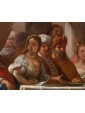
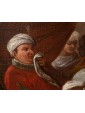
The banquet of the rich Epulone
Oil on canvas, cm 73 x 98
18th century, Neapolitan school
The banquet of the rich Epulone
Oil on canvas, cm 73 x 98
18th century, Neapolitan school
18th century, Neapolitan school
The banquet of the rich Epulone
Oil on canvas, cm 73 x 98
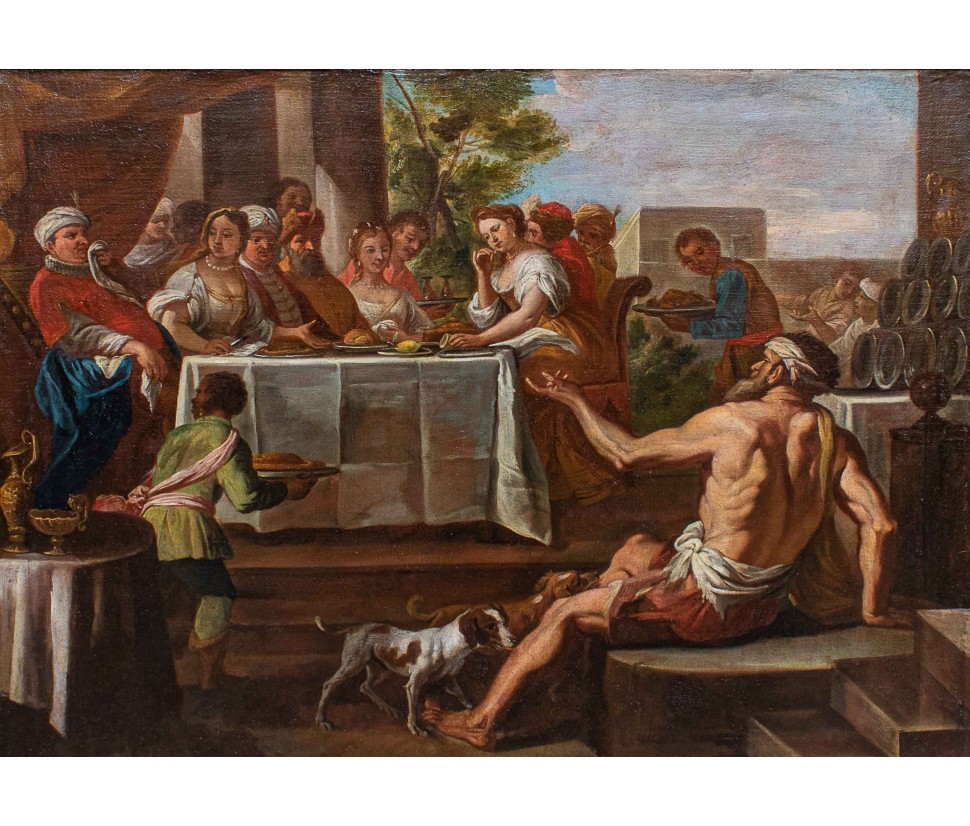
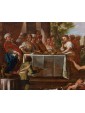
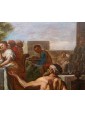
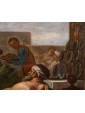
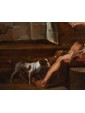
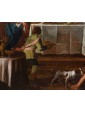
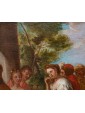
There are also the inevitable silver plates, neatly arranged in ostentatious display on the right side of the painting, and the scumbags who alone lend aid to the beggar by licking his wounds, The present painting unfolds in an airy detail the parable of the rich epulon. Recalled in Luke (16,19-31), the account is a literary precedent to the Dante counterpoint: a very rich man, priest of the temple of Jupiter, organized every day lucullian banquets dressed in purple and bisso; one day came to him a poor man, Begging for help, named Lazarus. The rich man paid no attention to him. Answering the ancient Latin maxim of nomen omen, the beggar Lazarus, whose name in Aramaic, Elazar, means "he whom God helps", once sat beside Abraham, while the rich Epulon was damned among the flames. The proper name given to the rich man, Epulone, which does not appear in the gospel text, is the result of a later literary tradition; it is in fact a distortion of the Latin verb with which it was translated from Aramaic, the step: epulabor, that is "banchettare".
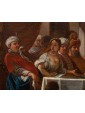
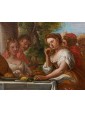
The present reveals the debt all Neapolitan in the crowded unfolding of figures, defined with force by the dark-brown that pervades the canvas. The dramatic nature of the gestures, evident in the contemptuous expression of Epulone and in the alambiccata sitting of Lazzaro, reflects the great baroque season of the city of Naples, welcoming with full hands the traditional incisiveness narrative. The progressive illumination that caresses the figures however betrays a overcoming of the ways which had already belonged to Mattia Preti (1613-1669) and Bernardo Cavallino (1616-1656). The eighteenth-century declination of the work is revealed in particular through comparison with a painting of an analogous subject by Luca Giordano (1634-1705), and now kept at the Palazzo Magnani. The perspective plunge from the Jordan into the sky, in which nuanced architectures stand out, is reflected in the present in the holiday palace on the right background of the canvas.
The object is in good condition
With Ars Antiqua you can defer all amounts up to a maximum of € 7,500 at ZERO RATE, for a total of 15 INSTALLMENTS.
Ex. Tot. € 4,500 = Monthly installment € 300 for 15 months.
Ex. Tot. € 3,600 = Monthly installment € 720 for 5 months.
For amounts over €7,500 or for a longer grace period (over 15 installments), we can provide a custom payment.
Contact us directly to get the best quote.
LIVE TV
- SUNDAY 17.00 - 21.00 Dig.terr. 126 + 809 SKY
- THURSDAY 21.00 - 24.00 Dig.terr. 125 + 809 SKY
- Streaming on our website www.arsantiquasrl.com and on our social networks Facebook and Youtube
All the works proposed by Ars Antiqua are sold accompanied by a certificate of authenticity in accordance with the law and accurate fact sheet.
You can see the works directly at the showroom gallery in Milan, in via Pisacane 55 and 57.
We personally organize transport and deliveries of the works, both for Italy and abroad
